China’s AI Power Problem
Over the past several years, China has rapidly and aggressively deployed AI technologies at massive scale. Despite facing Western embargoes and supply chain restrictions, China has managed to develop incredible domestic AI capabilities and ecosystems. However, being a few generations behind the West in semiconductor technology has led to very real challenges for the nation. Older chips typically generate more heat per unit of performance, run slower, and pushing them to competitive performance levels requires significant electrical and thermal consideration.
To try and partially bridge this gap, Chinese engineers have relied on overclocking and overvolting these older devices. While these methods do improve speed, they also quickly expose the limits of power delivery and thermal management. Traditional airflow-based cooling techniques that would otherwise be perfectly acceptable on cutting edge silicon struggle with the heat generated by older devices, even in large-scale data centers equipped with advanced air conditioning and specialized enclosures.
As such, high-density AI clusters can overwhelm airflow systems, creating hotspots that limit performance and threaten reliability.
China Moves Towards Liquid-Cooled Servers
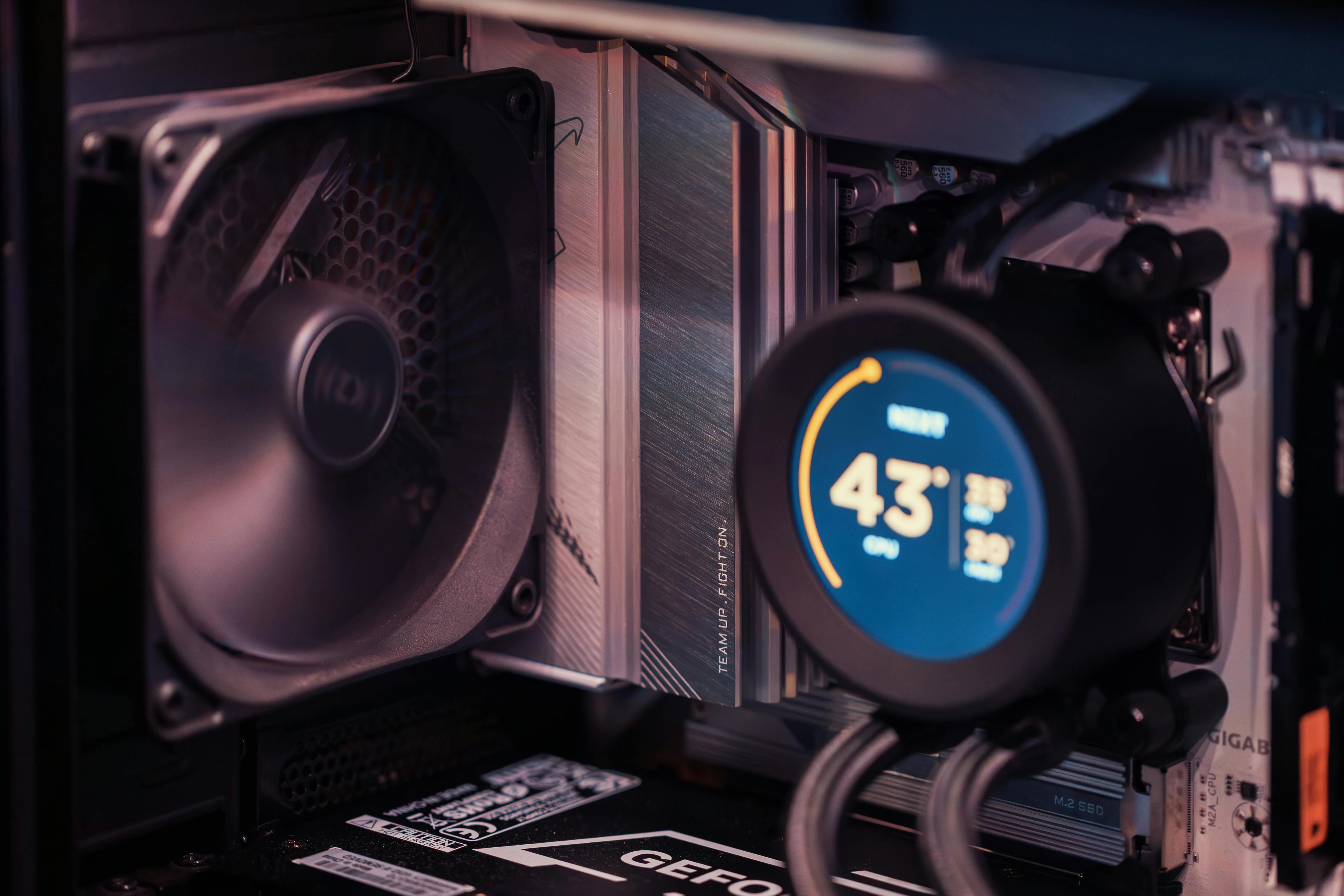
For China, the natural response to these challenges has been a shift toward liquid cooling. With AI-focused data centers in China having expanded rapidly, thermal and power densities have surpassed the limits of air cooling, meaning that liquid cooling is now becoming a practical necessity.
This need for a shift in cooling technology has prompted a coordinated response across the domestic supply chain inside China. For example, Sanhua Intelligent Controls has leveraged its existing thermal components to deploy liquid-cooled server systems, while Shenzhen-based Envicool has risen to become a major player, supplying precision cooling to clients including Nvidia, Intel, Alibaba, and Tencent, while drawing attention from international investors.
Furthermore, as AI models grow in size and workload, attention is shifting beyond semiconductors to the supporting infrastructure, including power delivery, cooling, and facility design. Thus, next-generation AI processors and rack-scale systems are increasingly engineered with liquid-cooling architectures from the outset, as opposed to being retrofitted into air-cooled racks.
Government policy in China is also accelerating adoption of liquid cooling strategies. Large-scale initiatives like Eastern Data, Western Computing, and stricter power usage effectiveness targets are incentivizing efficient, high-performance cooling solutions. Globally, the liquid-cooling supply chain is maturing, with upstream components such as cold plates, manifolds, and cooling distribution units supplied by manufacturers in the US and Taiwan to integrate into hyperscale and telecom data centers.
The Future of Server Cooling
China’s adoption of liquid cooling is inevitable due to its dependence on older hardware, but as high-performance AI workloads continue to generate heat at densities that airflow alone cannot manage efficiently, it may become the norm across all datacenters.
Compared to standard air-flow cooling, liquid cooling allows datacenter rooms to operate at much higher ambient temperatures while maintaining performance, moving thermal mass through dedicated channels to heat exchange areas capable of handling extreme loads.
However, the benefits of liquid cooling extend well beyond efficiency. Liquid-cooled facilities are much quieter, more compact, and in some cases, can repurpose waste heat for nearby buildings, improving energy usage overall. Of course, there are potential risks with liquid cooling including fluid leakage, but such concerns can be mitigated with non-conductive coolants and conformal coating of sensitive electronics.
As AI workloads continue to grow, liquid cooling is likely to become the standard, while air cooling will increasingly be relegated to legacy systems. And when considering how fast AI and cloud computing is growing, this shift to liquid cooling wont be optional, but essential for sustaining performance, improving efficiency, and enabling China’s AI ambitions at scale.