
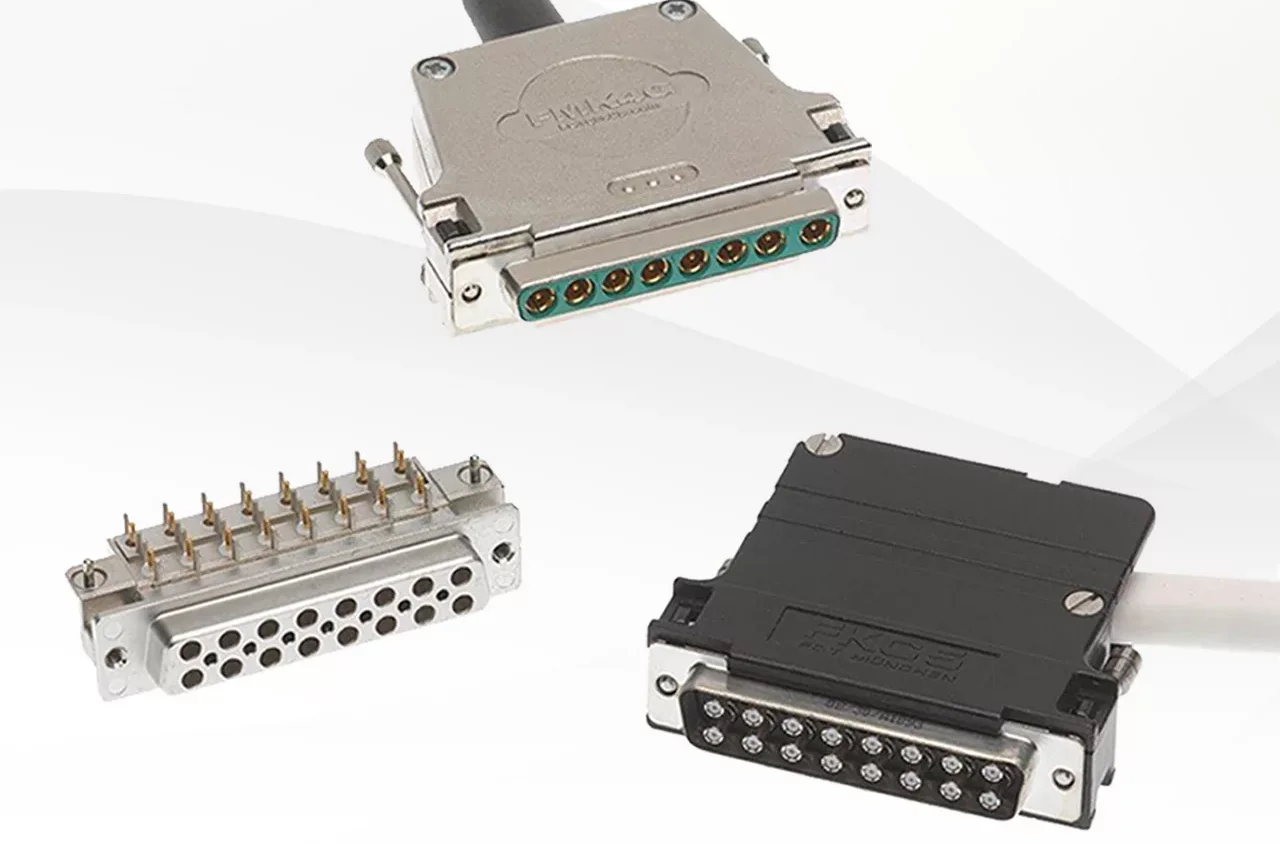
 Engineers working near the edge of millimeter wave testing know that connectors usually become the first constraint, not the silicon. As systems creep toward higher modulation rates, smaller wavelengths and wider instantaneous bandwidths, even a tiny inconsistency at the interface can distort results enough to hide what the device is actually doing. That is where the new 145 GHz Cardinal multi port assemblies from Molex start to matter because they take a connector style that was already trusted at lower ranges and extend its behavior into a region where many assemblies stop behaving like controlled transmission lines.
A Frequency Range That Pushes Past Traditional Test Equipment Limits
Reaching 145 GHz is more than hitting a higher number on a datasheet. It shifts what can realistically be characterized without resorting to specialized lab setups that are difficult to scale or repeat. The assemblies sit above the long standing 110 GHz benchmark and open access to the part of the spectrum reserved for advanced radar research, early 6G exploration and satellite development where signals get more sensitive to phase and amplitude errors. The assemblies keep insertion loss and return loss at levels that avoid masking the true behavior of wideband signals, which becomes essential when data rates push toward hundreds of gigabits per second and small discontinuities introduce distortions that can derail validation work. It gives researchers a way to examine signals normally constrained by connector performance rather than device capability.
Phase Matching That Preserves Multi Channel Measurement Integrity
High frequency testing rarely involves a single channel anymore. Multi channel radar, phased front ends and wide MIMO structures depend on phase consistency to determine whether the hardware or the test setup is creating the observed behavior. The Cardinal assemblies are built to maintain matched electrical lengths across their ports so multi channel measurements do not introduce errors that travel through the system as misleading phase differences. That becomes important when analyzing beam steering behavior or verifying high density interconnects intended for AI cluster backplanes, because even slight drift between channels can produce patterns that appear meaningful but originate from connector variation instead of circuit behavior.
A Multi Port Structure That Reduces Test Setup Complexity
Test environments that juggle several channels usually end up with bundles of coax that grow chaotic as the channel count increases. The Cardinal assemblies consolidate multiple ports into a single structure so routing becomes repeatable and less prone to movement induced variation. Engineers can move between 1x4, 1x8 and 2x8 arrangements without rebuilding the test bench every time the configuration changes. This reduces setup variability, shortens time spent stabilizing connections and cuts down on the mechanical stress that drives many coax assemblies out of spec. It also helps keep the test fixture compact enough that evaluation boards do not need to grow wider just to host the required connectors.
Repeatability That Supports Long Test Cycles
High frequency coax interfaces tend to degrade through use, especially when they are connected and disconnected for different test cycles. The Cardinal assemblies are rated for hundreds of cycles with mechanical precision that keeps measurements consistent from early prototypes through late stage validation. This matters in workflows where devices get swapped frequently because inconsistent connector behavior introduces measurement noise that complicates debugging. The ability to rely on stable performance across repeated cycles helps remove one more variable from multi hour or multi day test runs where small changes can mislead analysis. It gives the lab a connector that supports extended work rather than becoming a consumable.
A Scalable Path From Established Bands To New Research Territory
Many labs already use Cardinal assemblies at 67 GHz and 110 GHz, so the new 145 GHz version fits directly into workflows that rely on that mechanical ecosystem. Engineers do not need to adopt an entirely new connector family or redesign fixtures to reach the higher frequency range. This continuity reduces uncertainty when pushing into territory needed for AI backhaul characterization, emerging wireless standards and mmWave sensing experiments that move beyond existing test envelopes. The assemblies let researchers expand capability without overhauling the infrastructure that supports everything beneath it, which shortens the time between concept, characterization and iteration.
Learn more and read the original announcement at www.molex.com
Image credit: Molex
You may also like