
The Battery Problem
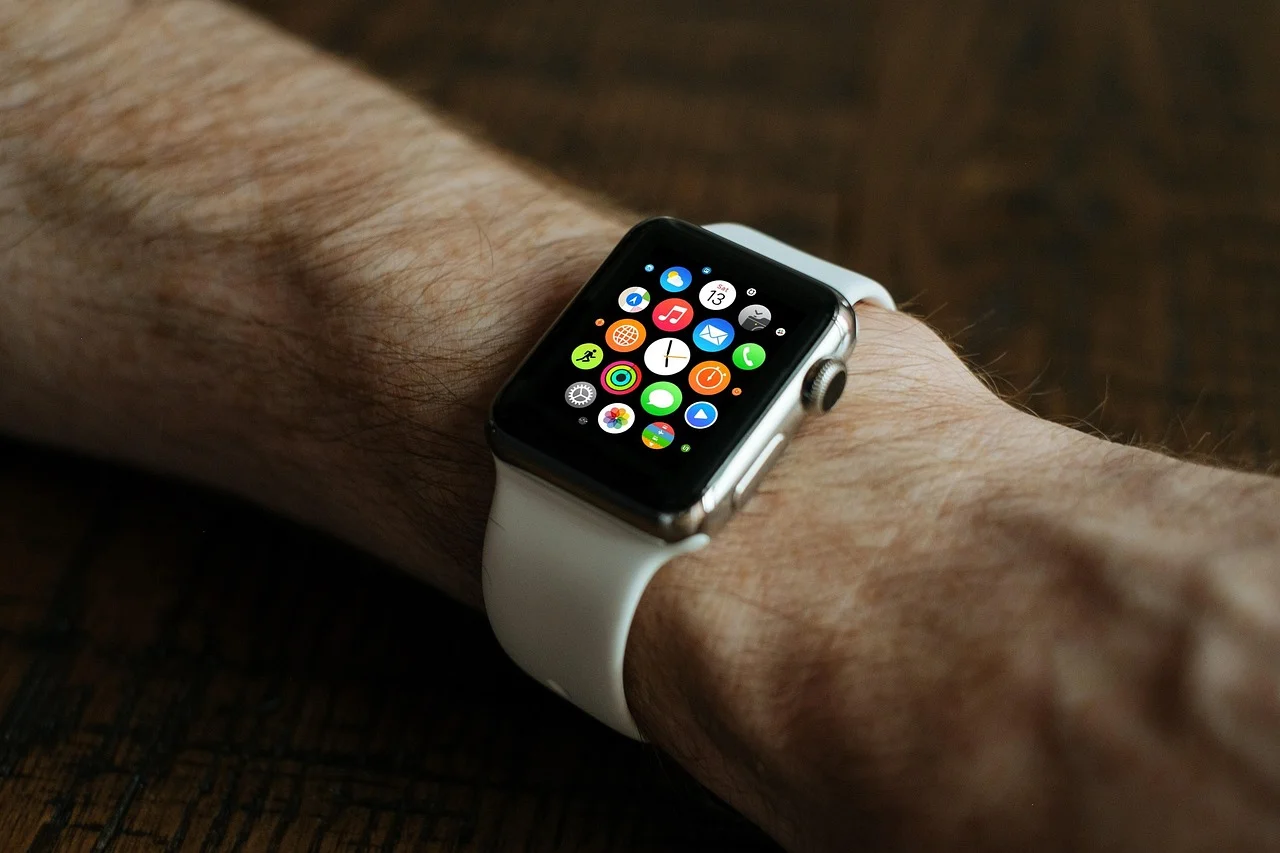
Wearable devices continue to increase in popularity thanks to modern advances in technology such as flexible displays, sensors, and microcontrollers. What used to be a sci-fi concept of having devices mounted onto our bodies to monitor health and provide internet access is now becoming a reality with wearable devices ranging from watches, rings, and in-ear pieces.
But while wearable devices are already extremely popular, they still have a long way to come. One of these problems is that wearable devices are often rigid meaning that they can be somewhat uncomfortable to wear. This is especially true for wrist-worn devices such as smartwatches which require a large battery, but even earbuds can suffer from discomfort if worn for extended periods of time.
Another problem faced by wearable devices is the inability to create smart clothes that can monitor health and provide many other convenient functions. Such clothes could easily be made from most materials and would allow for smart devices to move along with the wearer naturally. However, as wearable devices are often rigid, trying to mount them to clothing is virtually impossible without causing irritation.
But where wearable devices really struggle is power. As batteries generally have to be large and bulky to be useful, making wearable devices can be extremely challenging to power. Sure, devices like in-ear headphones have miniature batteries, but they almost always have a very restricted battery life, or, have to limit their capabilities.
This balance between size and capabilities is a problem that engineers are constantly trying to solve, with no solution ever being perfect.
Researchers Create Sweat Battery
Recently, Japanese scientists announced that they have been able to develop a sensor patch that can generate electricity from sweat, and may be the key to future battery-free wearable devices. The new device is constructed from a water-based “enzyme ink” that is printed onto ordinary paper and when worn on the skin, generates a peak power density of about 165 microwatts per square centimetre at 0.63 volts.
The new sensors, called enzymatic biofuel cells (EBFCs), generate electricity by using enzymes to drive a chemical reaction between lactate in sweat and oxygen. To date, such devices have been manufactured using complicated processes involving multiple steps and different chemicals. However, the Japanese team has developed a one-step process that includes the active chemistry directly in a printable formulation that can be screen-printed onto a thin paper substrate, avoiding the use of toxic organic solvents that can destroy enzyme activity. The researchers developed an enzyme ink with two cellulose-based substrates using screen printing technology designed to work under industrial conditions.
The enzyme ink was specifically designed to be compatible with the lactate oxygen cell, and the resulting electrodes were found to work consistently over several hours. The lactate oxygen cell, which is responsible for generating electricity in the new sensor, reached a maximum power density of 165 microwatts per square centimetre, exceeding previous reports of similar biofuel cells.
The researchers also found that the enzyme electrodes held steadier during longer tests compared with drop-casted electrodes, indicating the potential reliability of the screen-printed biofuel cells. The team is now looking for ways to improve the power output of the new biofuel cells, and has already demonstrated the integration of a biofuel cell with a sensor for measuring levels of lactic acid in sweat.
While the new sensors are not yet practical for everyday use, the team believes that the development represents a significant step toward the commercialization of self-powered wearable electronics. The researchers are planning to develop wearable textile-based devices and look for additional sponsors to further the project. If successful, they hope to have a practical demonstration ready by 2030.
Are Such Power Sources Really Viable?
What the researchers have demonstrated is a case of brilliant engineering and scientific understanding. The ability to generate energy from something as simple as sweat could be the key to future wearable devices, but while the power generated by the biofuel cell is impressive, it is far from being practical.
Most modern devices require power in the hundreds of milliwatts; smartphones typically consume a few watts during use (fast charging can involve tens of watts). So a single square centimetre of paper patch is never going to cut it for many applications.
Even simpler devices such as IoT SoCs can draw currents around 200 mA. At a typical supply of 3.3 V that is ~660 mW; at 165 µW/cm² you would need on the order of ~4,000 cm² of fuel cell area; far larger than a wearable patch.
Of course, such devices can be powered from smaller amounts of energy if a high-efficiency system is used, but this would only be possible if the device being powered could be made to operate at much lower energy.
For example, mobile processors are incredibly power hungry due to their high frequency operation, so a mobile processor operating at 100 MHz would most likely use a fraction of the energy that it does at 1 GHz. Thus, mobile devices operating at such frequencies would be able to get more power from a biofuel cell.
But this is not to say that such power sources are irrelevant or a failure. In fact, this is how most research works; you start off with something that is impractical, then over time, you make it better and more efficient. So, will this biofuel cell help to power future wearable devices? Most likely, but not as a standalone power source. It is more likely that this fuel cell will be used to supplement a small battery that, when combined, can power a device for extended periods of time.
And of course, this will most likely be used in smart shirts or other clothing that integrates sensors to monitor medical vitals. Such devices might not need a conventional battery and could be partially powered by sweat-based cells for very low-power sensing or to extend the life of a small rechargeable battery, but they would also need to survive washing and real-world use, so for the time being this technology remains primarily at the research stage.