
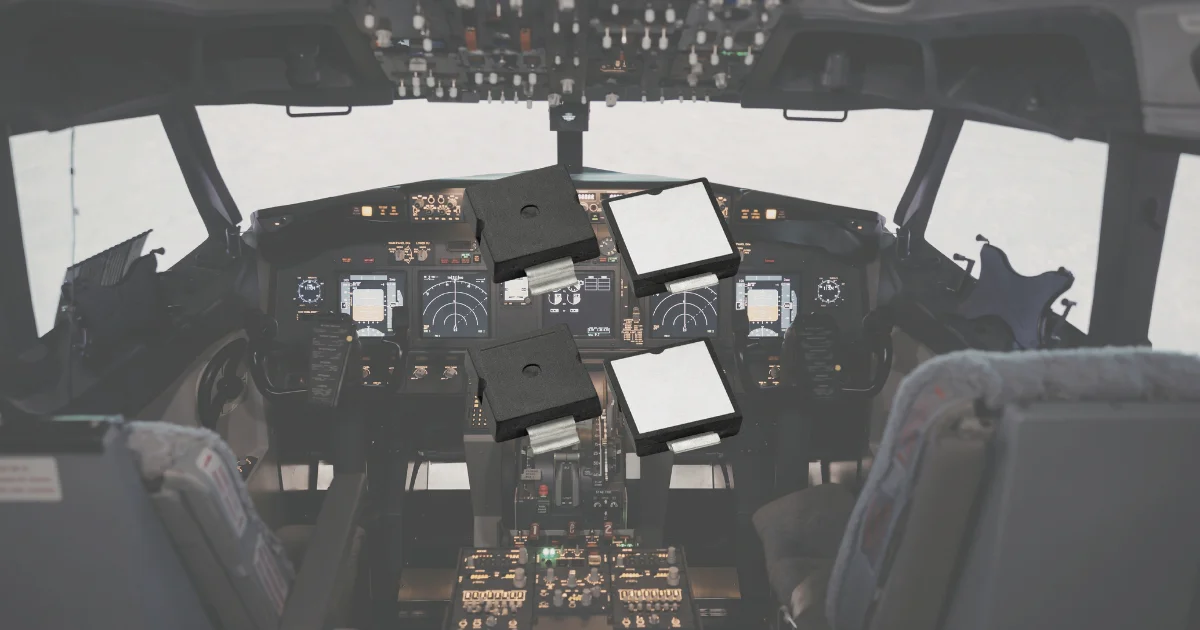
 High-energy TVS protection has usually come with a mechanical penalty. If you wanted serious surge handling for avionics or other harsh electronic systems, you were often pushed toward bigger axial parts, more awkward assembly flow, and extra compromise on board space. Littelfuse has now moved that conversation into surface mount with the SM15KPA-HR/HRA and SM30KPA-HR/HRA series, a set of high-reliability TVS diodes built for lightning-induced transients in aircraft, defense electronics, and other designs that do not get much tolerance for failure.
These devices bring 15 kW or 30 kW peak pulse capability in an SPD4-1 surface-mount package, which is a much more practical fit for modern automated assembly than the older through-hole style many engineers still associate with this level of protection. The SM15KPA-HR/HRA and SM30KPA-HR/HRA series are high-reliability TVS diodes used to clamp destructive transient events on vulnerable lines and buses in avionics and related systems. In a typical aircraft electronics module, that can mean protecting I/O interfaces or a power rail feeding control, navigation, or communications hardware after a lightning-induced surge hits the system.
Moving High-Power TVS Protection Into SMT
High-power protection is easy to appreciate in isolation, but packaging still decides whether a part fits the direction the rest of the hardware is moving in. Surface mount means standard pick-and-place assembly, lower profile implementation, and less friction during manufacturing. Now, that sounds mundane until you are the one trying to protect a dense board without adding assembly steps nobody wants.
Littelfuse is also positioning these parts around RTCA/DO-160 Waveform 5A Level 5 protection, which is exactly the sort of detail that makes this more than a generic high-power TVS update. Avionics hardware is not short on transient threats, and lightning compliance is one of those requirements that stops being abstract very quickly when wiring runs are long, exposed, and tied to systems that have no room for strange behavior.
Why Clamping Behavior Deserves A Closer Look
The headline ratings are straightforward enough: 15 kW for the SM15KPA families and 30 kW for the SM30KPA families, both specified on a 10/1000 μs waveform. Response time is listed at less than 1 ps, and Littelfuse also calls out low incremental surge resistance and strong clamping behavior. That last point is the one engineers will care about most, because raw surge survival is only half the story. A protection device that technically lives through the event but still lets the downstream electronics see too much stress is not much comfort on a real board.
There is also a broad voltage span here. The 15 kW versions cover reverse standoff voltages from 20 V to 400 V, while the 30 kW versions start at 28 V and go to 400 V. That gives the series enough range to cover very different protection points, from exposed interfaces to higher-voltage bus structures. Littelfuse also states 30 kV IEC 61000-4-2 ESD protection for data lines, which makes the parts less niche than the aerospace framing first suggests.
Screening Is Still Central To Avionics Qualification
The HR and HRA split is worth noticing because this is not just branding. Both versions are screened for high-reliability use, but the HR versions include Group B testing for extra verification rigor. That's important in the sort of programs where component selection is less about catalog availability and more about surviving qualification reviews, traceability questions, and the slow accumulation of reliability evidence that aerospace and defense teams always end up needing.
Littelfuse also points to 100% surge testing, high-temperature storage, temperature cycling, X-ray inspection, HTRB testing, and final electrical characterization to MIL-STD-750. None of that is flashy but it is the kind of screening that gives a device real credibility in aerospace and defense programs. In protection circuits tied to flight computers, radar electronics, or eVTOL power subsystems, the packaging is convenient and the surge rating is strong, but the screening is what gives the part weight when reliability requirements start getting serious.
Learn more and read the original announcement at www.littelfuse.com
Technology Overview
The SM15KPA-HR/HRA and SM30KPA-HR/HRA families are high-reliability surface-mount TVS diodes used to protect sensitive electronics from lightning-induced and other transient voltage events. They provide 15 kW or 30 kW peak pulse capability on a 10/1000 μs waveform in an SPD4-1 package and are positioned for avionics, aviation, and eVTOL applications.
View the SM15KPA-HR/HRA datasheet. View the SM30KPA-HR/HRA datasheet.
Frequently Asked Questions
What are the SM15KPA-HR/HRA and SM30KPA-HR/HRA used for?
They are used to protect vulnerable circuits such as I/O interfaces and VCC bus lines from lightning-induced and other transient voltage events in avionics, aviation, and eVTOL systems.
What is the difference between the 15 kW and 30 kW series?
The SM15KPA families provide 15 kW peak pulse capability, while the SM30KPA families provide 30 kW peak pulse capability, both specified on a 10/1000 μs waveform.
You may also like