
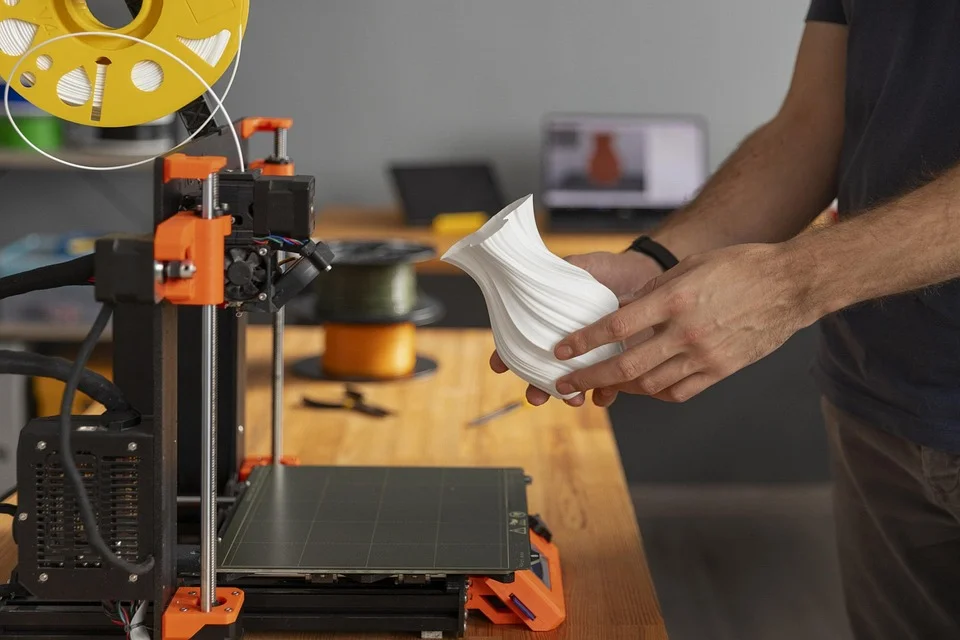
 Recently, PizzAndy, an inventor in the maker community, showed their 3D filament dryer that mines bitcoin at the same time. While this is novel, it also raises a very serious question about heat generation, and how computational devices could become the key to future heating systems for homes. What challenges does electrical heating face in the West, what did the maker develop, and why could computational devices become the key to future heating systems for homes?
The Challenge with Electrical Heating
Interestingly, there is only one electrical device that approaches 100% efficiency, and that is heaters. In many cases, electrical heaters are found in domestic and commercial environments, being able to rapidly heat up areas, have good temperature control, and are conveniently located.
However, with the increasing cost of electricity, they are far from being the cheapest option. When compared to gas, electricity can be as much as three times as expensive, meaning that heating with electricity is often a luxury, limited to small spaces.
But what if instead of directly turning electricity into heat, we could do something else? What about devices like computers and computation which generates heat as a byproduct? Well, it turns out that such devices are also almost 100% efficient if used as a heater.
For example, a standard computer used for everyday tasks can easily consume 100W of power, but of this 100W, only a few watts are lost as a result of switch losses, with the rest is turned into heat. While the total amount of heat produced by such devices is miniscule compared to a dedicated heater, a single desktop computer can still produce more than 100W of heat.
While desktop machines are far from ideal for heating a room, some datacenters take advantage of this excess heat and pump it into nearby homes and offices to provide what is essentially free heating. Of course, these installations are complex to build and require plenty of planning, which is why they are typically only found in colder climates.
Maker Uses BTC Miners to Dry 3D Filament
Recognising the benefits of computational heat, an inventor in the maker community, PizzAndy, has recently revealed a prototype of a 3D filament dryer that not only dries the filament, but also mines Bitcoin. So far, the device has been able to achieve an average of 6 TH/s while consuming 140W of power, which is competitive for a compact, integrated application but not necessarily "far better" than any other 3D printer miner currently available, as there are few direct commercial equivalents for this specialized use case.
The device is able to capture the waste heat produced by the Bitcoin miners, and use this heat to keep the filament at a controlled temperature, thus keeping the filament free from moisture. This is not the first time that PizzAndy has created a Bitcoin-mining machine; he also created a 3D-printer/Bitcoin-mining hybrid that was demonstrated at the T3chfest in December 2021. This earlier design had the ability to keep the print bed at a constant temperature of around 75˚C, while having a hash rate of 500 GH/s, and the new prototype incorporates the scaling and tuning improvements discussed for that design.
By keeping the filament free from moisture, the dryer prevents numerous issues faced by 3D printers when working with filament, including popping, stringing, bubbles, weak layer bonding between layers, and a poor surface finish. Furthermore, the drying of filament is essential for long-term storage as well as use. If not properly dried, filament can degrade over time, especially when stored in humid conditions.
With the success of the 3D printer-mining hybrid, the inventor noted that users typically turn to their own solutions for drying filament, such as using a kitchen oven, but this is both impractical and a fire risk. Thus, a dedicated dryer that allows users to “stack sats” while they print could prove to be beneficial.
Now that the device is proven to work, the prototype is intended to move beyond trade-show demonstrations and become a commercial product that combines filament drying with Bitcoin mining.
Could Computation be the Key to Future Heating?
Considering the rising prices of electricity and gas, there is a potential solution that could provide both heating and computational services: using decentralized, small-scale datacenters as residential heat sources.
In order for this to work, it would require each home to be equipped with a small server rack whose sole purpose is to provide heat. A single radiator can easily consume 2kW, so having a server rack whose total consumption is around 10kW could provide plenty of heating during the colder months. Furthermore, this power is already going towards computation, meaning that the resulting heat is not wasted, as it serves two purposes: computing and heating.
Another major advantage to such servers would be that they are not subjected to the same device densities found in datacenters, meaning that they don’t need to be cooled as intensely. As such, they can be spaced out, drawing air from the bottom of the home, pump the heat back into the home, and then exhaust air into the atmosphere.
Considering that almost all energy is turned directly into heat , such a system could help reduce total energy waste by repurposing computation-generated heat for residential comfort. Of course, trying to interconnect servers across homes would present numerous challenges, but this isn’t to say that datacenters could be moved closer to residential areas. Instead of trying to connect individual machines together, small datacenters could be set up in residential areas, providing edge services while providing heating.
For now, we will have to continue to rely on gas and electricity for our heating needs, but the integration of computational devices for heat recovery and residential heating may become more common as energy prices and environmental concerns drive innovation.