
 As researchers demonstrate a new power source utilizing microbes and seawater, it has many wondering how engineers will solve the future of power challenges as we introduce more sensors into our world. What challenge do ocean-born sensors introduce, what did the researchers develop, and could we turn to more biochemical methods for power generation in the future?
What Challenges do Sensors in the Ocean Face?
It is truly amazing to see how much data we have gathered from the ocean, and yet, despite this fact, there is still so much to learn about its depths. Everything from the rotation of the earth to the use of ships all affect marine life as well as the quality of the water and its nutrient balances. Furthermore, it isn’t just life that makes the ocean fascinating, studying and monitoring the ocean for climate purposes is also crucial.
Temperature fluctuations, heights of waves, and currents all need to be monitored for signs of change, and, in order to do this, researchers often deploy large numbers of sensors that are anchored in key places and then routinely send back data. But trying to power these sensors comes with a whole range of challenges, and unless a great deal of funding is obtained, it is not always possible to monitor the depths of the ocean.
Those that float above the surface can utilise solar panels and battery backups, but even then, these can get damaged, face the wrong way, and suffer from issues with efficiency. If sensors need to be submerged, then solar simply cannot be relied upon, with batteries being utilised instead. Even then, as with all batteries, their charge will eventually dissipate, meaning that such sensor networks have to be sparsely populated as replacing batteries is an extreme undertaking.
The net result is that researchers looking to monitor the oceans will either be extremely limited in the number of sensors they deploy, or, have to find an alternate method for generating power.
Researchers Demonstrate Microbe-Based Battery for Ocean Applications
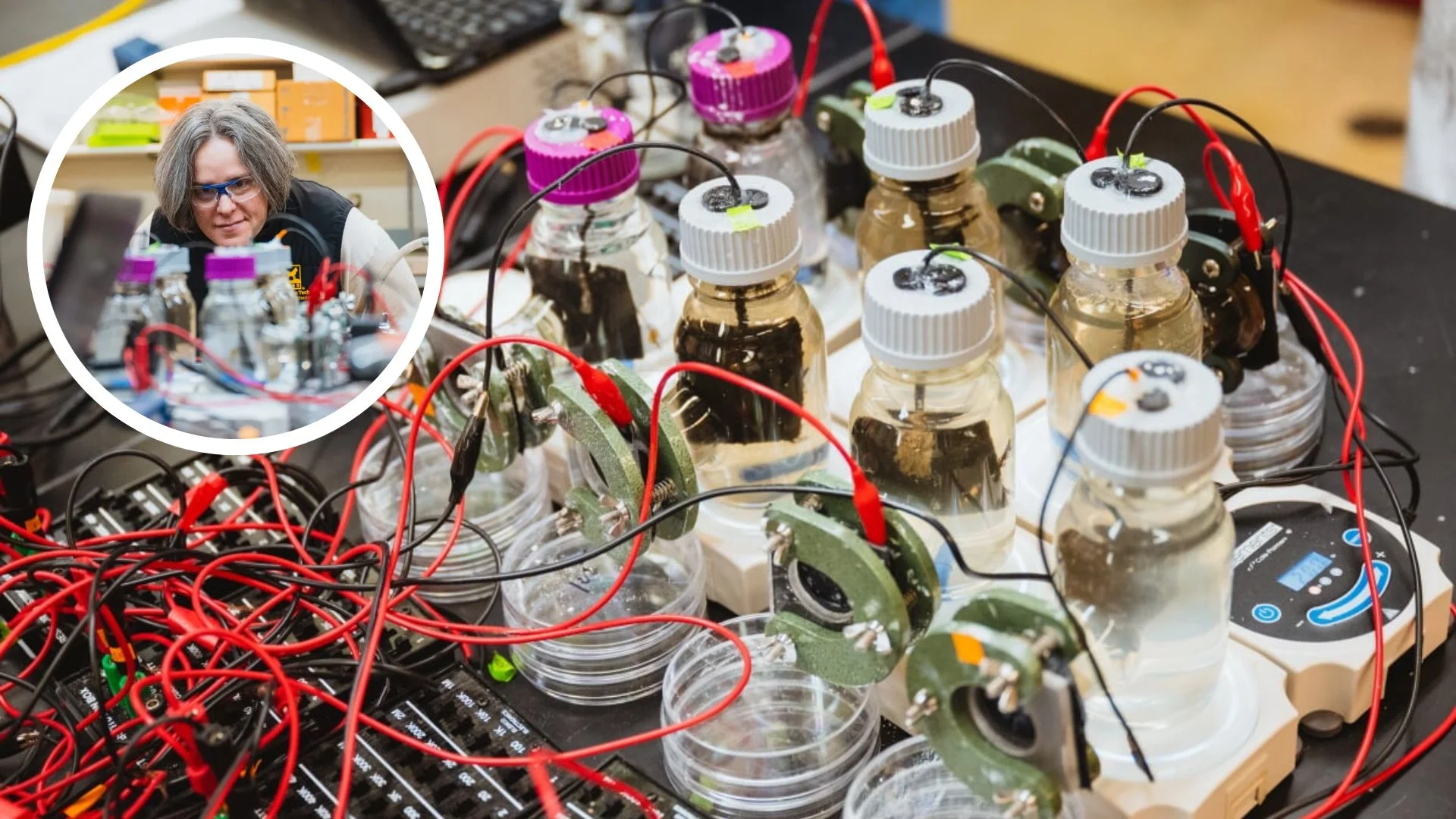
Recognising the challenges faced with underwater sensors, researchers at Michigan Technological University have recently developed a new method for producing electricity underwater utilising naturally occurring microbes and organic matter found in the ocean.
The research project, led by Professor Judith Perlinger, is a result of the US Defence Advanced Research Projects Agency (DARPA) BLUE program that aims to create power solutions for long-endurance applications utilising self-refueling undersea sensors. While numerous projects have been awarded, the one being led by the research team at Michigan Tech has received $1m to solve the energy problem faced with underwater sensors.
According to the researchers, the new microbial fuel cells (MFCs) can be used to generate electricity from naturally occurring organic matter found in seawater, and the resulting electricity can be used to power sensors. By utilising microbes that transfer electrons during their metabolism, the researchers were able to create an electrical current between an anode and cathode using dissolved organic material and microscopic marine biomass.
However, the researchers initially faced numerous challenges when experimenting with microbial fuel cells due to the nature of the marine environment. Firstly, seawater contains low concentrations of organic matter, which limits the fuel available to microbes and reduces their performance. Secondly, the seawater is rich in oxygen, and this generally reduces the efficiency of the fuel cells.
To solve these challenges, the researchers turned to the use of granulated activated carbon inside tubular fuel cells that allow microbes to form biofilms and continue to generate electricity. Furthermore, the researchers were able to demonstrate that even in oxygen-rich environments, the microorganisms were able to continue generating electricity.
Finally, after months of testing, the researchers were able to demonstrate their prototype system underwater in a 30-day trial in Chesapeake Bay. More recently, the researchers have moved their designs to a new location in Galveston Bay where a series of newer designs are now generating electricity. The researchers noted that of the four power cells, three provided consistent power output over a 30-day period, while one was found to be faulty.
With the results showing that the new power sources are able to continue producing electricity underwater, the researchers are now looking to deploy a total of 10 power sources in Chesapeake Bay to continue to study the power sources and determine if they can operate for extended periods of time. Once proven, the researchers hope that their design could soon be used to power sensors underwater for extended periods of time, and potentially, even for an entire year.
Could the Future of Sensor Power Lie in Microbes?
As we look towards the future of sensor development, the needs on power sources will fall. What used to require beefy batteries and amps of current can now be done using tiny coin cells consuming less than a milliampere of current.
Furthermore, as this trend continues, engineers will also be presented with more unusual power source options, including triboelectric generators via movement, stray radio emissions, and even through temperature differentials. But what makes the research from the Michigan Technological University interesting is that, like most living things, microbes are self-healing and self-rejuvenating. As such, microbes could provide an excellent power source for future sensors, and considering that they are literally found in every corner of the planet, they are unlikely to ever run out of power.
While these power sources will never be able to provide the amount of power needed to run screens and other portable devices, they could very well provide the foundation for future sensor deployments, especially in areas that are inaccessible to humans. Not only does such a power source merely need to access oxygen and water, but could likely require some minerals and nutrition, all of which can often occur naturally. Furthermore, such a power source would be self-sustaining and may never require replacement once installed.
Such a power source could also give engineers the ability to deploy sensors far more densely, thereby giving engineers a better idea of their surroundings. Of course, this is all speculation, and there are numerous environments where this type of power source would fail. Volcanic activity, for example, is cruel to life, and the lack of oxygen, access to water, and extreme heat would likely kill any microbes present. But for generic environments, this type of power source could very well be key to future mass sensor deployments.