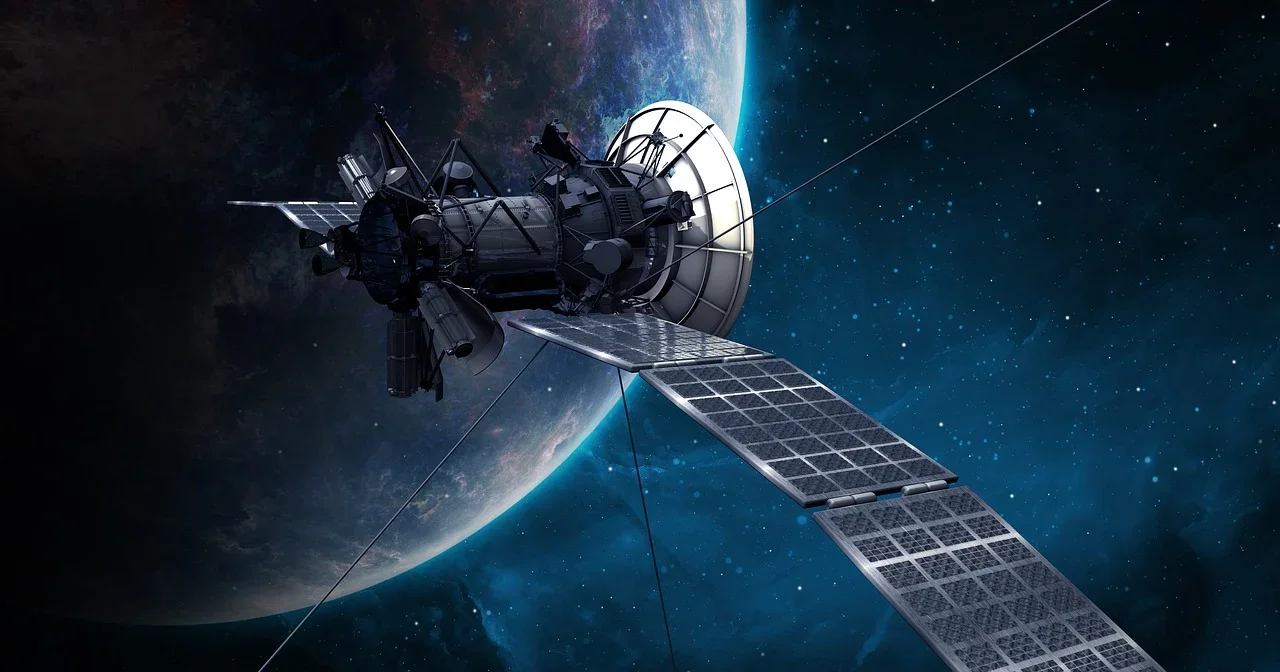
 To try and solve the issue with spacecraft needing constant human attention and the issues of long communication round-trips, NASA have recently developed an AI chip that has 500 times the performance of earlier designs. What challenges do spacecraft face, what did NASA develop, and why could it be the future of spacecraft design?
The Problem With Remote Spacecraft Operations
Of all the things that NASA is famous for, it is their ability to send probes and robotic platforms to other planets that makes them truly amazing. While their past crewed space missions may have been somewhat limited, it has been their ability to send robotic probes to the moon and beyond that routinely mark their achievements in the fields of technology and science.
For example, the Voyager 1 probe has managed to escape our solar system, while numerous other probes have explored planets, asteroids, and even comets. But while these platforms have proven to be capable and reliable, they all have one big problem; they all require human input for control.
Most craft currently in use have to phone home and await instructions, especially for maneuver and target selection. For example, the Mars rovers have to wait for movement instructions that are carefully programmed and tested prior to execution. Normally, this wouldn’t be a problem if the robot was in a neighbouring room, but the vast distances involved mean that signal delays of hours are possible, meaning that real-time control is simply not possible.
One potential solution is to integrate AI into these devices so that they can make decisions themselves, but this comes with its own range of challenges, primarily issues of reliability. Considering that AI devices have far higher transistor densities than those used in current satellite and space platforms, they are far more vulnerable to the harsh radiation environments found beyond the earths atmosphere.
For this reason alone, current spacecraft have thus been unable to take advantage of fully autonomous capabilities and decision making.
NASA Develops New AI Chip for Future Missions
Recognizing the challenges faced by current probe technology, NASA has recently developed a new radiation-hardened processor whose capabilities would put most space-bound CPU technologies to shame. The new device is being developed as part of NASA’s High Performance Spaceflight Computing (HPSC) initiative which aims to create a next-generation processor for use in future space missions.
The HPSC initiative is a collaboration between Microchip Technology and the Jet Propulsion Laboratory (JPL), with Microchip being responsible for the development of the processor hardware, and JPL providing guidance and development of software solutions for the processor. Currently, NASA utilizes space-grade processors in their missions, but while these are incredibly reliable, they are also extremely slow. The reason for this comes down to the need for the processors to be able to withstand large amounts of radiation as well as extreme temperatures, launch vibration, and many g forces during take off.
Because of these strict requirements, such processors, many which were designed some years ago, will often be based on older architectures. While these older architectures and capabilities have many years of proven operation and heritage, this also means that they are extremely limited in what they can do. In the case of the current HPSC initiative, however, the engineers have been able to produce a processor whose performance has been stated to be around 500 times that of current radiation-hardened processors.
To ensure that the new processor performs well in space, engineers from NASA are subjecting the new device to all kinds of torture tests including radiation exposure, extreme temperature cycles, shock, and even full functional testing. According to NASA, the results from the early tests have shown that the new device is not only able to withstand the expected conditions found in space, but also exceeds expectations which has led NASA to believe that the final product will provide significantly better results when completed.
While the exact nature of the processor is still somewhat shrouded in secrecy, some details released by NASA show how the new device is a compact SoC, and that the new processor will provide greater performance than any previous device used in spaceflight. Furthermore, the new device will integrate a number of key features that will allow for greater security and protection from common software threats such as buffer overflows, data corruption, and malicious code injection.
Could Such Chips Be the Future of Space Travel?
It’s pretty obvious that the advantages of onboard autonomy and AI processing are massive, but before we rush to integrate such capabilities into every future mission, there are some serious questions that we need to ask.
One of those questions relates to the concept of control and accountability. How much autonomy should a spacecraft have? Who is responsible for its actions? If a software error or unexpected environmental condition leads to a wrong decision, who gets blamed? Trying to spend billions of tax payers money on a probe with no method of accountability can be a hard sell, even if to discover new worlds and uncover new truths.
Another consideration is the risk associated with using AI in space missions. While onboard AI systems could allow spacecraft to operate more independently, they also introduce new points of failure. Software bugs, flawed training data, or unexpected situations could cause an AI system to make poor decisions without immediate human oversight.
On Earth, these kinds of issues can often be corrected quickly with updates and direct intervention, but spacecraft operating millions of miles away face communication delays and limited opportunities for real-time control. If an AI system behaves unpredictably during a critical operation, mission controllers may have little ability to intervene before damage is done to the mission or the spacecraft itself. But ultimately, it’s clear that future missions to places like Mars, Jupiter’s moons, and beyond will require spacecraft that can think for themselves, prioritize data streams, identify potential hazards, and make decisions in real-time. Thus, the radiation-hardened AI-capable chip being developed by NASA could help make that vision a reality.
Of course, it’s not just about spaceflight. Many Earth-based systems could eventually benefit from this level of autonomy and processing capability, including aviation, defense, and autonomous robotics. But as we continue to push the boundaries of technology, we must also remember that with great power comes great responsibility, especially when we’re talking about systems that can think for themselves and make decisions with far-reaching consequences.
Overall, what NASA is developing is truly exciting, and could usher a new era of spaceflight where computers do more than follow orders, but instead, lead the way.
You may also like