
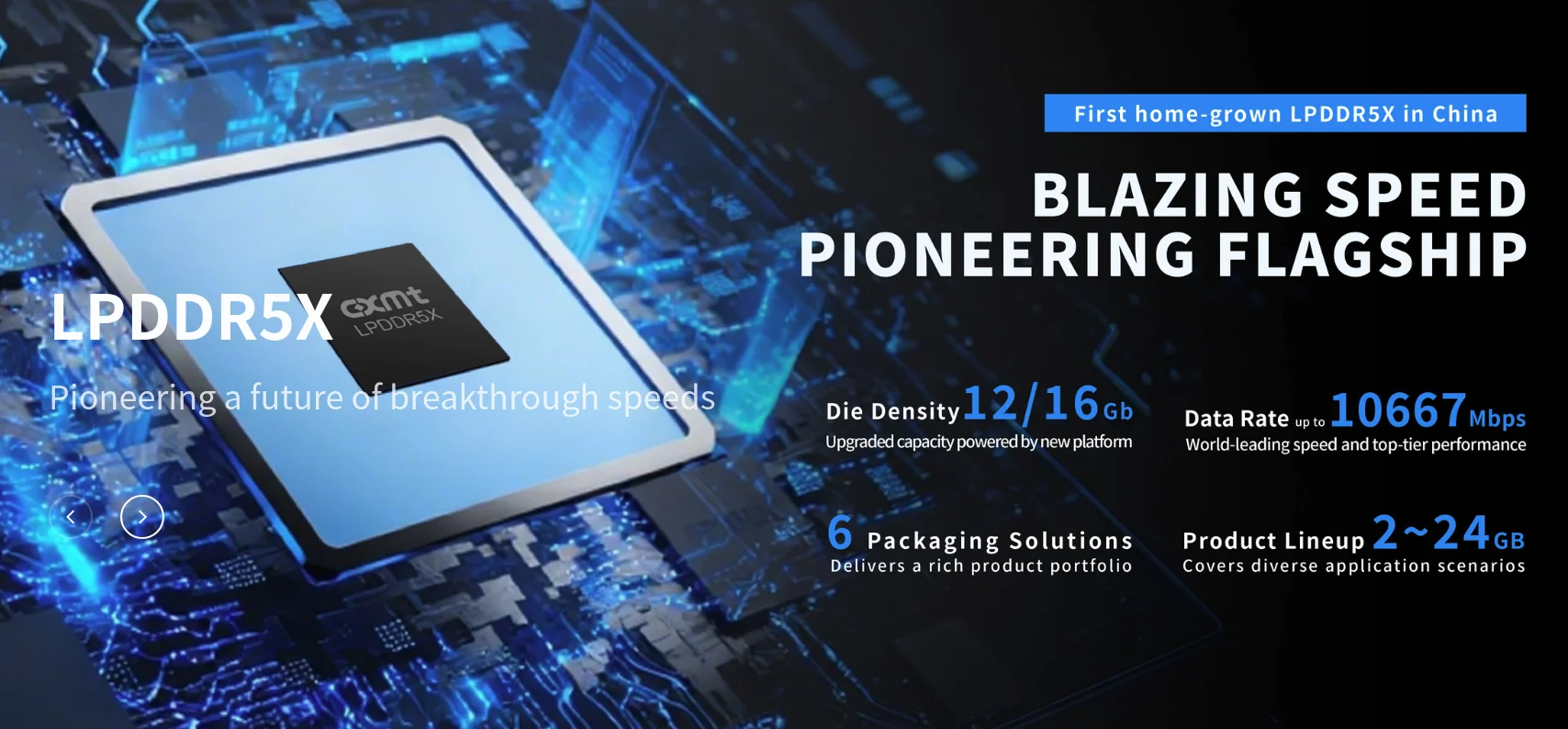
 As we face an unprecedented memory crises, many have turned their eyes to China in the hope that the country will soon produce consumer DRAM chips. Now, CXMTs latest IPO offering has seen a 470% surge in value, showing that the memory maker could be the answer.
CXMT Shares Skyrocket 470% In Stock Market Launch
As we face an unprecedented memory crisis, many have turned their eyes to China in the hope that the country will soon produce consumer DRAM chips. Now, CXMT's latest IPO offering has seen a 470% surge in value, showing that the memory maker could be the answer.
The memory chip maker ChangXin Memory Technologies (CXMT) has seen a dramatic rise in shares during its debut on the Shanghai Stock Exchange's Star Market, with its closing price shooting up by more than 470%. With a final value of around 3.3 trillion yuan (£364.9bn), CXMT is now mainland China's most valuable listed company.
However, the performance of CXMT shares should not come as a surprise, as the memory manufacturer specializes in the production of DRAM memory chips used in AI data centres, smartphones, PCs, tablets, and other everyday electronics. It was also revealed that CXMT will be using most of its IPO proceeds to expand its production capabilities while continuing to conduct research into next-generation memory technologies.
The strong debut was also partly driven by demand greatly exceeding the limited supply of shares available for trading, with only around 7% of the company's shares initially available to investors. This limited availability, combined with strong investor demand, helped to drive the extraordinary rise in CXMT's share price.
At the same time, the surge in share value demonstrates the confidence shown by Chinese investors in a domestic semiconductor champion, especially when considering that Beijing is pushing hard to achieve greater semiconductor independence from the West.
Furthermore, the DRAM market is dominated by Samsung Electronics, SK hynix, and Micron Technology, which together account for approximately 90% of global DRAM production, leaving plenty of room for CXMT to grow.
The success of CXMT comes at a time when Chinese financial markets have been struggling with a recent technology stock sell-off, with more than £1tn in market value wiped from Chinese stocks. The rise of CXMT shares therefore provides a much-needed boost to the market, especially when considering that the memory market is facing a serious shortage, with some companies turning to resale platforms to secure stock.
<br>
Why China is the Future of Consumer Semiconductors
One pattern that continues to show in the West is that when it comes to manufacturing, we are often focused on the latest and greatest technologies.
For example, if the latest memory, processor, or sensor technology is needed, then you can be sure to find it in the West. However, once a technology or product becomes established and the profits associated with it begin to fall, its production quickly shifts to the Far East.
And the same has happened to memory, where the sudden rise of AI combined with the need for powerful GPUs and data centers has seen Western manufacturers shift their attention towards these technologies.
But in doing so, everyday consumer needs are not being met, causing the prices of memory and CPUs to spike significantly as supply becomes increasingly limited.
However, with such large price increases, Chinese manufacturers are seeing the major gaps in the market and recognizing that targeting these gaps could not only provide decent profit margins, but also help to eliminate some of the supply shortages faced by the West.
Furthermore, as the semiconductor technology capabilities of China increase, the country is now able to produce more types of semiconductors. Instead of just simple diodes and transistors found in everyday consumer products, China is now producing billions of memory devices, microcontrollers, and much more.
As there is relatively little interest in manufacturing these types of semiconductors in the West, China will undoubtedly rise as one of the most important sources for consumer-grade electronic components.
And it is here where the situation becomes somewhat humorous. Many in the West are concerned about Chinese manufacturing and the sourcing of Chinese semiconductor parts, yet the West has little incentive to manufacture these very parts itself.
If Western governments want to prevent companies such as CXMT from expanding into Western markets and stop Chinese manufacturers from becoming dominant suppliers of consumer-grade semiconductors, then they need to up their game and change how manufacturing is approached in the West.
Instead of focusing almost entirely on the latest and most advanced technologies, Western nations need to recognize that established technologies are still essential to modern society. If the West wants to maintain control over its own consumer electronics supply chains, then it needs to start manufacturing the parts required to support them.
You may also like