
Texas Instruments SN74LV8T373/Q1 Translating D-Type Flip-Flops
Manufacturer
Part #
Category
Texas Instruments SN74LV8T373-Q1 SemiconductorsDescription
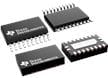
The Texas Instruments SN74LV8T373/Q1 Translating Octal D-Type Flip-Flops feature eight D-type latches with shared Latch Enable and Output Enable inputs. They support a wide supply voltage range of 1.65V to 5.5V and are AEC-Q100 qualified for automotive applications. Typical applications include parallel data storage and digital bus buffering.

Texas Instruments SN74LV8T373/Q1 Translating D-Type Flip-Flops
Introduction
The Texas Instruments SN74LV8T373/Q1 is a versatile and robust component designed for various digital applications. As a translating octal D-type flip-flop, it provides essential functionality for data storage and signal buffering, making it a valuable addition to any electronic design.
Part Description
The SN74LV8T373/Q1 features eight D-type latches that share common Latch Enable (LE) and Output Enable (OE) inputs. This component operates across a wide supply voltage range of 1.65V to 5.5V, making it suitable for various logic levels, including 1.8V, 2.5V, 3.3V, and 5V. The device is AEC-Q100 qualified, ensuring its reliability in automotive applications. Its design includes a reduced threshold input circuit that allows for voltage level up-translation when the supply voltage exceeds the input voltage. The flip-flops are packaged in a wettable flank QFN format, enhancing their usability in compact designs.
Applications
- Parallel data storage
- Digital bus buffering
Industries
- Automotive
- Consumer electronics
- Industrial automation
- Telecommunications
Usage Ideas
- Automotive Data Logger: Utilize the SN74LV8T373/Q1 to create a data logger for automotive applications, capturing sensor data and buffering it for processing.
- Microcontroller Interface: Implement the flip-flops to interface between a low-voltage microcontroller and higher voltage peripherals, ensuring safe and reliable communication.
- Signal Conditioning Circuit: Design a signal conditioning circuit that uses the flip-flops to buffer and translate signals in a digital communication system, improving signal integrity.
Conclusion
The Texas Instruments SN74LV8T373/Q1 Translating D-Type Flip-Flops are a powerful solution for various digital applications, particularly in automotive and consumer electronics. With their wide supply voltage range and robust design, they offer flexibility and reliability for engineers looking to enhance their electronic designs. Whether for data storage or signal buffering, this component is an excellent choice for modern applications.