
Dual Flip-Flops
Manufacturer
Part #
Category
Texas Instruments SN74AC2G100/SN74AC2G100-Q1 SemiconductorsDescription
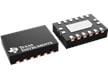
Texas Instruments SN74AC2G100/SN74AC2G100-Q1 Dual Flip-Flops offer two independent D-type flip-flops with a rising-edge triggered clock and configurable logic data inputs. These flip-flops support various logic functions and are AEC-Q100 qualified for automotive applications. They are designed to operate in noisy environments and can handle slow edge-rate signals.

Texas Instruments SN74AC2G100/SN74AC2G100-Q1 Dual Flip-Flops
Introduction
The Texas Instruments SN74AC2G100/SN74AC2G100-Q1 Dual Flip-Flops are versatile semiconductor components designed to enhance digital circuit functionality. With their ability to handle various logic functions and operate in challenging environments, these flip-flops are ideal for a wide range of applications, particularly in automotive settings.
Part Description
The SN74AC2G100/SN74AC2G100-Q1 features two independent D-type flip-flops that are triggered by a rising edge clock. They come equipped with active low clear and configurable logic data inputs, allowing for a variety of logic functions such as buffer, inverter, AND, OR, NAND, NOR, XOR, and XNOR. The inputs utilize a Schmitt-trigger architecture, which supports slow or noisy signals, making these flip-flops reliable in less-than-ideal conditions. Additionally, the AEC-Q100 qualification ensures that the SN74AC2G100-Q1 is suitable for automotive applications, with a temperature range of -40°C to +125°C.
Applications
- Holding a signal during controller reset
- Inputting slow edge-rate signals
- Operating in noisy environments
Industries
- Automotive
- Consumer Electronics
- Industrial Automation
- Telecommunications
Usage Ideas
- Automotive Control Systems: Utilize the SN74AC2G100-Q1 to manage state changes in automotive control systems, ensuring reliable operation under varying temperature conditions.
- Signal Conditioning: Implement the flip-flops in a signal conditioning circuit to stabilize and clean up noisy signals before further processing.
- Digital Logic Projects: Create a simple digital logic project that uses the flip-flops to perform basic logic operations, such as building an XOR gate or a memory element.
Conclusion
The Texas Instruments SN74AC2G100/SN74AC2G100-Q1 Dual Flip-Flops are robust and flexible components that cater to a variety of applications, especially in the automotive industry. Their ability to handle slow and noisy signals, combined with their AEC-Q100 qualification, makes them an excellent choice for engineers looking to enhance the reliability and functionality of their digital circuits.