
Texas Instruments TPUL2G123/-Q1 Dual RC-Timed Mono Multivibrators
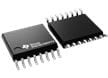
Manufacturer
Part #
Category
Texas Instruments TPUL2G123/-Q1 SemiconductorsDescription
The Texas Instruments TPUL2G123/-Q1 Dual RC-Timed Retriggerable Monostable Multivibrators features two independent devices designed for 1.5V to 5.5V operation. It includes three trigger inputs and is AEC-Q100 qualified for automotive applications. The output pulse duration can be configured using external resistance and capacitance values.

Texas Instruments TPUL2G123/-Q1 Dual RC-Timed Mono Multivibrators
Introduction
The Texas Instruments TPUL2G123/-Q1 is a versatile dual RC-timed retriggerable monostable multivibrator designed for a wide range of applications. Operating within a voltage range of 1.5V to 5.5V, this component is particularly suitable for automotive applications due to its AEC-Q100 qualification.
Part Description
The TPUL2G123/-Q1 features two independent devices that can be configured to generate output pulses of varying durations, determined by external resistance and capacitance values. Each device includes three trigger inputs: one for rising-edge triggers, one for falling-edge triggers, and a clear input (CLR) for asynchronous control of active output pulses. The Schmitt-trigger architecture on all inputs enhances noise immunity and allows for slow input transition rates, making it ideal for various electronic applications.
Applications
- Demodulating digital Amplitude Shift Keying (ASK) signals
- Resetting systems for fixed periods
- Generating positive fixed-width digital pulses
- Detecting rising edges of digital signals
- Detecting falling edges of digital signals
- Debouncing switches
Industries
- Automotive
- Consumer Electronics
- Industrial Automation
- Telecommunications
- Medical Devices
Usage Ideas
- Automotive Reset System: Use the TPUL2G123/-Q1 to create a reset mechanism for automotive control systems that require a fixed delay after power-up.
- Digital Signal Processing: Implement the multivibrator to demodulate ASK signals in a wireless communication project, ensuring reliable data transmission.
- Switch Debouncing Circuit: Design a switch debouncing circuit that utilizes the multivibrator to clean up noisy signals from mechanical switches in user interfaces.
Conclusion
The Texas Instruments TPUL2G123/-Q1 Dual RC-Timed Mono Multivibrators offer flexibility and reliability for a variety of applications, particularly in the automotive sector. With its ability to generate configurable output pulses and robust noise immunity, this component is an excellent choice for engineers looking to enhance their electronic designs.