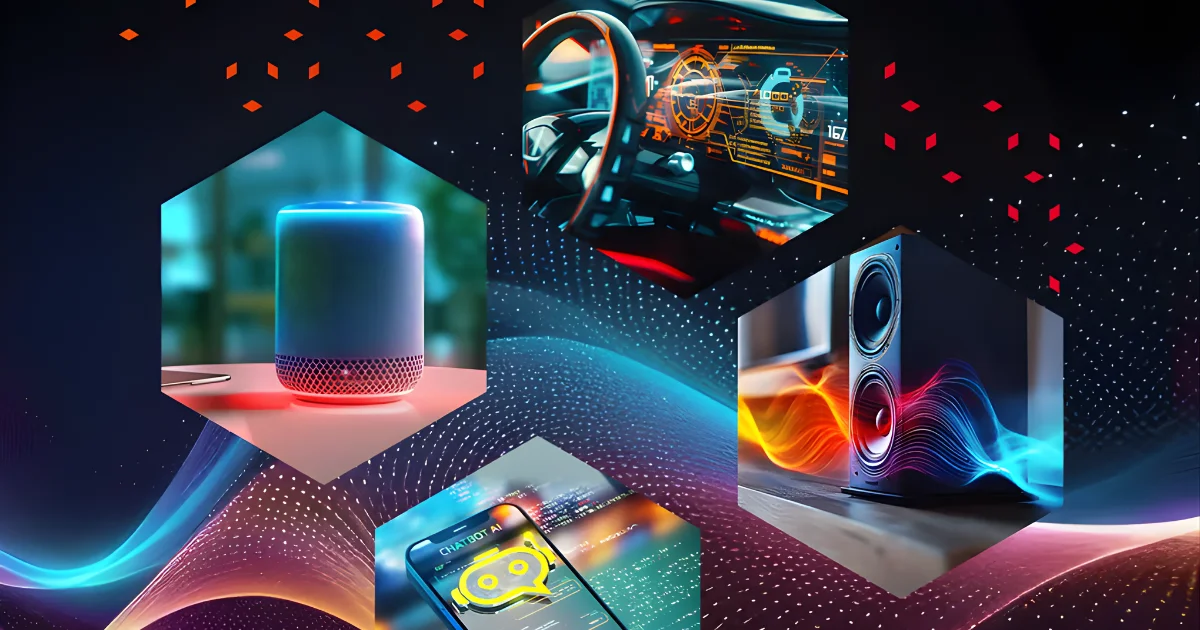
 Voice interfaces and immersive audio processing keep pushing SoC designers toward higher compute density without the power cost of general purpose cores. As audio algorithms move closer to real time AI workloads, traditional DSP pipelines start to hit limits in efficiency and data flow. Cadence’s new Tensilica HiFi iQ DSP is built around that shift, introducing an architecture that raises throughput for AI enhanced audio while keeping power low enough for edge devices and tightly constrained consumer hardware.
Architecture Shaped for Modern Audio and Voice AI
The HiFi iQ DSP arrives as the sixth generation in the HiFi line, but it separates itself through architectural tuning aimed at small language models, neural audio processing and higher resolution codecs. Cadence states that the design doubles raw compute performance compared to HiFi 5s and delivers up to eight times higher AI performance, which gives SoC teams more headroom for workloads that blend classical signal processing with machine learning layers. In practice this helps when an audio pipeline includes echo cancellation, noise suppression, beamforming and keyword spotting while also supporting the early stages of NLP.
The device also supports formats such as FP8 and BF16 for running compact AI models efficiently, which aligns with the movement toward on device inference in voice driven systems. For engineers building hardware with tight thermal envelopes, the claim of more than 25 percent energy savings across typical workloads matters because it avoids escalating core frequency or adding parallel DSP clusters.
Behaviour Aligned With Immersive Audio and Spatial Rendering
Modern entertainment and automotive systems lean heavily on codec performance and spatial audio rendering. The HiFi iQ DSP is designed to handle object based codecs and higher sampling rates without the latency penalties that appear in older architectures. Cadence highlights over 40 percent performance improvement on multiple audio codecs relative to the previous generation, which allows multi channel playback and 3D spatial zones to run in real time without consuming the entire SoC compute budget.
For voice controlled interfaces, the ability to manage beamforming, active noise cancellation and automatic speech recognition on the same core gives manufacturers a consistent processing model. This is particularly useful in home devices, cabins and wearable systems where microphone arrays and local inference must operate continuously on restricted power budgets.
Integration for Edge AI and Physical AI Systems
The DSP is positioned as a standalone processor for running small and large language models directly on the core, allowing voice AI systems to move more capability to the edge without a companion NPU. When additional acceleration is required, it can be paired with Cadence Neo NPUs or custom NPUs. Compatibility with NeuroWeave, TensorFlow Lite for Micro, LiteRT and ExecuTorch keeps model development predictable, which helps teams that need to test AI pipelines before committing to silicon.
This integration path is relevant for designs where responsiveness, privacy and offline operation drive the decision to run inference locally. As physical AI spreads through home, industrial and automotive systems, the efficiency gains of the HiFi iQ architecture help avoid the thermal and battery compromises that come with shifting everything to a main CPU or GPU.
Why This Matters for SoC Designers
Audio subsystems have become critical interaction surfaces in modern electronics, and their computational requirements have grown faster than many legacy DSPs were designed to handle. The HiFi iQ DSP addresses this shift by providing a path to run immersive audio, low latency speech processing and on device AI within a single architecture. Its alignment with ISO 26262 functional safety targets also positions it for safety critical environments, which expands its relevance in automotive designs.
For engineers, the main value is a DSP core that reflects the direction of audio and voice workloads rather than the assumptions of previous generations. It gives teams a way to increase capability without overhauling the rest of the system or absorbing additional power cost.
Learn more and read the original announcement at www.cadence.com
You may also like