 Embedded systems engineers have spent years hearing that artificial intelligence belongs on large processors with plenty of memory and compute headroom. That assumption holds up when running complex models in servers or application processors. It breaks down quickly inside microcontroller designs. Most embedded systems operate with tight power budgets, modest memory, and deterministic control loops that cannot tolerate long inference delays. Yet the demand for local intelligence keeps appearing in the same devices.
TinyEngine NPU Changes How Small MCUs Handle Inference
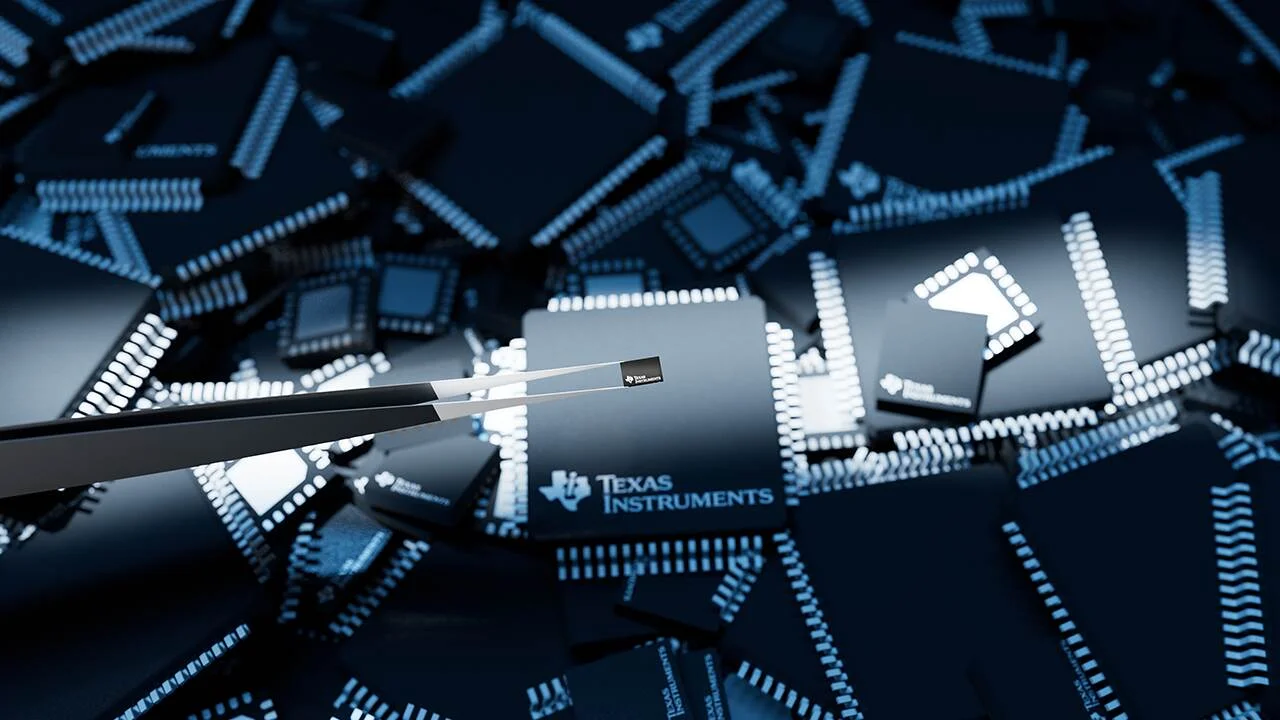
Texas Instruments has introduced two microcontroller families that integrate a neural processing unit called TinyEngine directly alongside the CPU core. The MSPM0G5187 and AM13Ex devices are built to run machine learning inference locally rather than sending data to a remote processor or cloud service.
The NPU handles neural network operations while the main CPU continues running application code. Instead of pushing matrix operations through the microcontroller pipeline, the dedicated hardware processes them in parallel. TI indicates that this approach can reduce inference latency dramatically compared with MCUs performing the same workload entirely in software. Energy consumption drops as well, which becomes noticeable in systems that run inference repeatedly while operating from limited power sources.
Cortex-M0+ Devices Start Handling AI Workloads
One of the interesting aspects of the announcement is where the NPU appears in the portfolio. The MSPM0G5187 uses an Arm Cortex-M0+ core, a processor normally associated with very small embedded systems. These devices typically manage sensors, control simple interfaces, or monitor system state. They rarely run workloads associated with machine learning.
Integrating the TinyEngine NPU shifts that assumption slightly. A small MCU that once handled simple control tasks can now run inference locally without forcing the designer to step up to a larger processor. Engineers designing wearables, smart appliances, or monitoring equipment may find that certain AI features can remain inside the microcontroller rather than moving the system to a more complex architecture.
You start noticing the impact when looking at low-power systems that must make decisions locally. Sending data elsewhere for analysis introduces latency, connectivity dependence, and often additional power consumption.
Real-Time Control Systems Gain AI Assistance
The AM13Ex family targets a different part of the embedded spectrum. These devices combine an Arm Cortex-M33 core with the TinyEngine NPU while maintaining hardware structures intended for real-time control.
Motor control is one of the primary examples. Systems that manage multiple motors in appliances, robotics platforms, or industrial machinery already run tight feedback loops that must respond within predictable time windows. Adding adaptive control or predictive algorithms on top of that control logic normally requires additional processing hardware.
In this architecture, the control system continues to run on the CPU while the NPU evaluates model outputs related to system behavior. That separation allows the real-time control loops to remain deterministic while still introducing AI-driven adjustments.
Toolchains Begin Treating AI As A Standard MCU Feature
The new microcontrollers are supported by TI’s development environment and its Edge AI Studio toolchain, which includes a library of prebuilt models and application examples. Engineers can experiment with machine learning functions without building an entire toolchain from scratch. More than sixty models and example applications are already available inside the development ecosystem. The idea is to shorten the path between an embedded application and the deployment of a small inference model running locally on the device.
It is another sign that AI capabilities are slowly migrating downward in the hardware stack. What began as a workload reserved for large processors now appears in devices that still look very much like traditional microcontrollers.
Learn more and read the original announcement at www.ti.com
You may also like