The Rise Of RISC-V In The AI Space
RISC-V has been around a few years now, and its development is only continuing. What started out as a somewhat novel idea has quickly turned into a real contender against other processor technologies. The introduction of a free ISA that is open-source has allowed for all kinds of engineering companies to design their own CPUs while still being able to work with each other. This means that when it comes to hardware design, RISC-V will become an extremely important instruction set to support as it can allow for a product to be targeted to multiple CPU manufacturers.
But one space that RISC-V is seeing real potential in is AI. As everyone rushes to try and build AI processors, people need an ISA and CPU to build on. Solutions such as x86 and ARM are great, but they are not so easy to get a hold of, often with expensive and strict licensing.
Furthermore, these solutions can be at times difficult to access in specific countries due to licensing and export controls (such as China), meaning that engineers in these areas could massively benefit from a processor technology that can be easily develop and deployed. When taking these factors into considering, it becomes blindingly obvious that RISC-V will become one of the most viable option for next generation AI systems.
Alibaba To Use RISC-V For New AI Chip
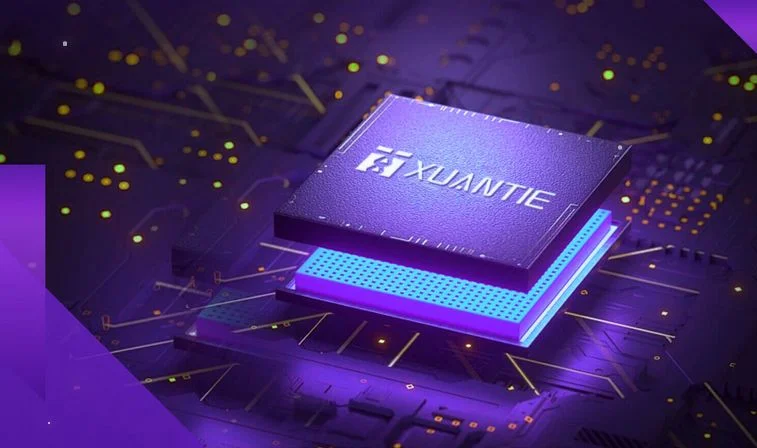
Proving the capabilities and reliability of RISC-V as an ISA, Alibaba has recently announced that it has designed a new AI chip that will be used in its data centers. The new chip, called the XuanTie C950 central processor unit (CPU), will utilize RISC-V architecture that will compete with Arm. In a statement released by Alibaba, it said that the new CPU will help to power AI agents that handle complex tasks such as recognition, natural language processing, and speech tasks.
The XuanTie C950 was developed with the goal of processing multi-step tasks carried out by AI agents, meaning that the CPU is designed with inferencing in mind. Alibaba's DAMO Academy has stated that XuanTie CPUs can also be customized for specific inference patterns, thus supporting customers to tailor the chips for their own use.
Alibaba also commented that the XuanTie CPUs achieve over 30% improvement in performance when compared to some mainstream products due to their flexibility in customization for specific use cases.
Does This Show RISC-V Could Be The Future For AI?
When looking at the number of companies that are now trying to develop next-generation NPUs, it seems that RISC-V is going to be the most viable option. An industry that moves as fast as AI does not need to rely on processor architectures controlled by private entities with licensing and royalty requirements. But not only is RISC-V open-source and free to use, because of this, there are more opportunities for third-party companies to develop their own RISC-V solutions.
This means that AI developers will have plenty of freedom to make their own or outsource their CPU needs. While there are those who believe that RISC-V has serious limitations preventing it from becoming a mainstream choice, there is clear evidence that more companies are turning towards RISC-V, and this will absolutely cause pain for companies like Intel and ARM.
The era of closed-source ISAs is coming to an end, and the next generation of engineers do not want to be held hostage to an architecture whose foundation cannot be changed. Considering that AI will be the next revolution in computing, this is a golden opportunity for RISC-V to make its entrance as the dominant CPU technology.
You may also like