 A new power chip has been developed that could help to reduce wasted energy in datacenters by improving the efficiency of DC-DC converters. What challenges do datacenters face regarding power consumption, what did the engineers develop, and could it be the solution to future datacenters?
The Datacenter Energy Challenge
Datacenters are massive computational systems that are popping up all over the place. The introduction of cloud-based solutions, AI, and the need for immense computational resources is seeing massive amounts of money being pumped into them, and it is no surprise that datacenters are excellent investments. However, as more AI hardware is packed into racks, the energy consumption is also skyrocketing, and this is making it increasingly harder to run datacenters.
The problems faced with power consumption in datacenters come from a wide range of factors. One major issue is that trying to get power into datacenter racks can be difficult, and low voltage distribution has its own range of challenges , from current losses to inefficiencies. Another challenge is that while datacenters themselves are often in constant use, many parts of the datacenter can be idle. This is further compounded with the high energy costs associated with utilities, and trying to reduce power consumption can be challenging.
Finally, the high energy consumption of datacenters also introduces heat, which itself presents a whole range of challenges. Cooling systems can be expensive, and trying to move air across from servers can be difficult. At the same time, the heat generated by datacenters also sees a significant increase in the surrounding environment, which can contribute to localized environmental impacts.
Researchers Create Chip That May Save Datacenter Power
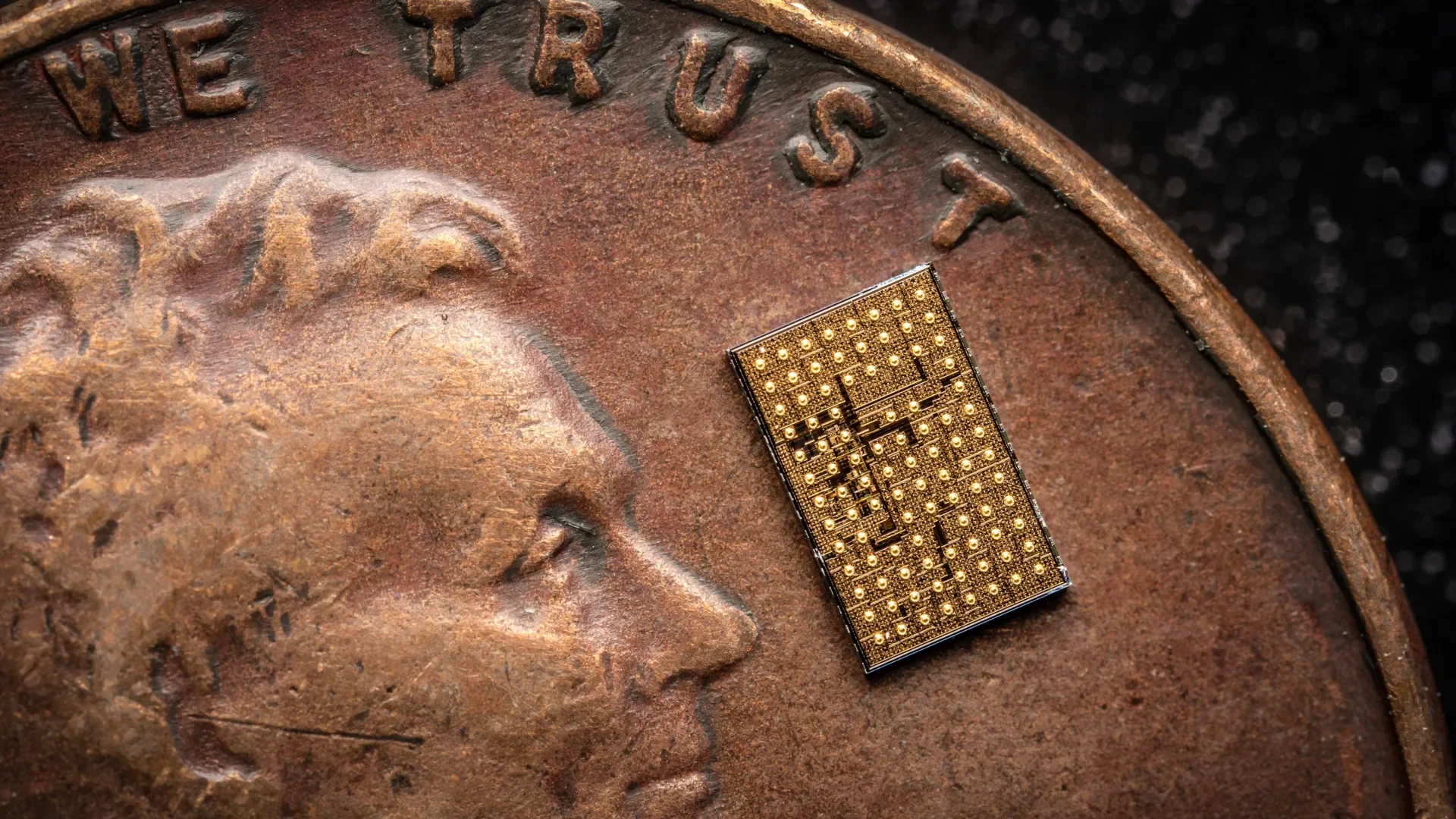
Recently, engineers from the University of California San Diego (UCSD) have developed a new chip design that could help to significantly reduce energy waste in data centers. The innovation focuses on improving the efficiency of DC-DC step-down converters, which are critical components in modern data centers that convert high voltages into lower levels required by computing hardware.
Traditionally, DC-DC converters face significant challenges when converting large voltage differences, such as the difference between the input and output voltages. This leads to a decrease in the converter's efficiency, making it difficult to deliver the required amount of current. To address this issue, the researchers explored a new approach to DC-DC converter design that uses piezoelectric resonators, which store and transfer energy through mechanical vibrations, combined with small, commercially available capacitors in a unique configuration.
The researchers created a prototype chip that combines a piezoelectric resonator with a commercial capacitor to create a hybrid converter that can handle larger voltage conversions more efficiently than traditional approaches. The prototype chip was able to convert 48 volts to 4.8 volts with a peak efficiency of 96.2% and delivered approximately four times more output current than previous piezoelectric-based DC-DC converters.
However, the researchers also acknowledged the challenges that their technology still faces. For example, piezoelectric resonators generate mechanical vibrations that can be challenging to integrate into electronic systems. The team is currently working on developing new integration strategies to address this challenge.
Is this DC-DC Conversion Stage the Ultimate Solution?
Converting high voltage to low voltage has its own issues with efficiencies, and when dealing with AC, this adjustment is a solved problem. But when dealing with DC, this is where things can get tricky, and trying to distribute thousands of watts at 24V and 12V can see massive currents (and therefore current losses).
If what the researchers have proposed here does indeed work when scaled up, then it could be massive for the power industry. Hardware in machines could potentially be increased in voltage, thereby reducing current losses, and make energy distribution easier while also reducing waste heat.
Of course, it is still in the research stage, but the results here are truly incredible.
You may also like