
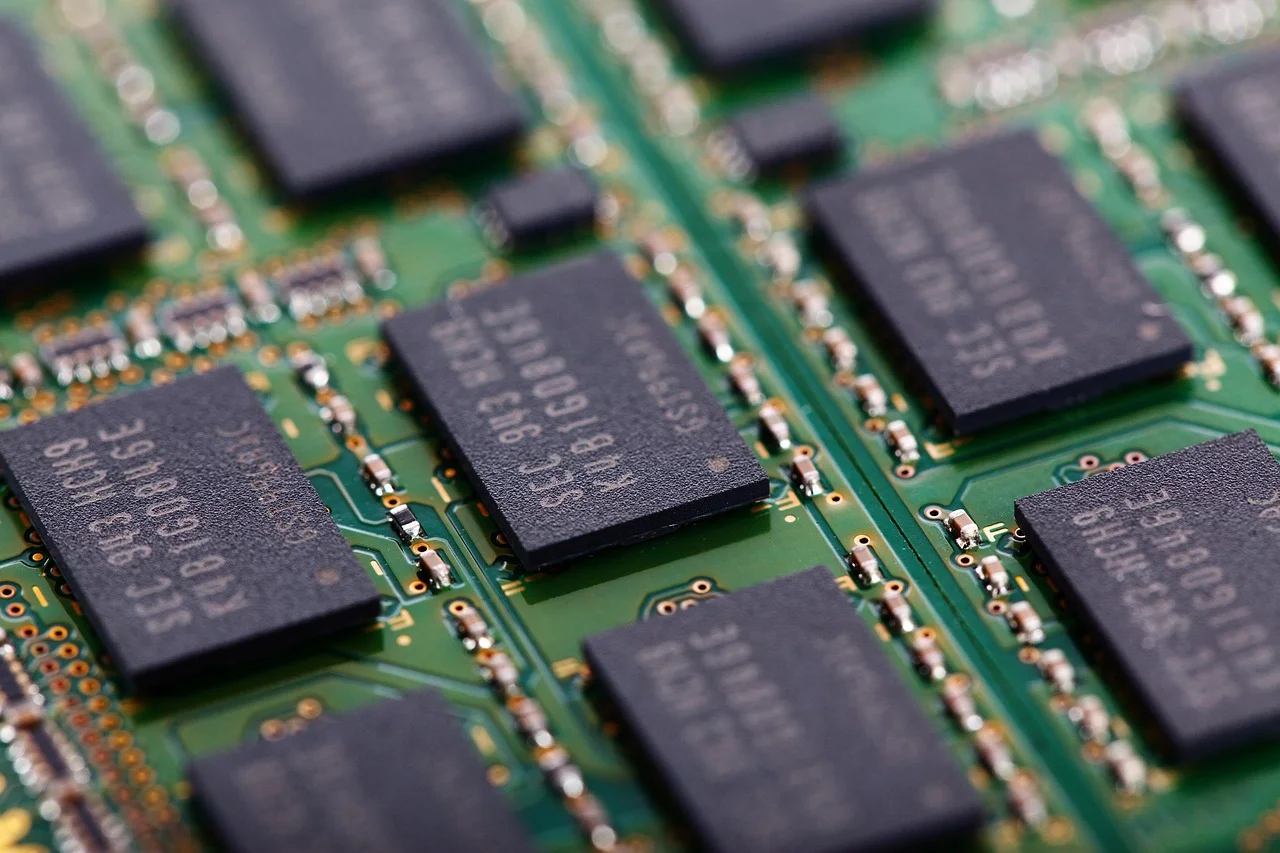
 As predicted, the latest stats have shown that chip output in China has jumped 350% over the past decade, with China dominating the legacy semiconductor market. So what exactly do the numbers tell us, and why is this a sign for the West to change its tactics?
China’s Semiconductor Output Jumps 350% Over Past Decade
Recent semiconductor statistics have revealed that China’s total chip output has increased from 108.7 billion units in 2015 to 484.3 billion in 2025, representing growth of almost 350% over the past decade. This dramatic increase is part of China’s wider ambition to become a global semiconductor leader, with the country investing billions into manufacturing facilities, research programs, and domestic supply chains.
However, while China has made significant progress, it still remains behind countries such as South Korea and Taiwan when it comes to producing the most advanced semiconductor technologies, including leading-edge processors and graphics chips.
Instead, China has focused heavily on mature-node and legacy semiconductor production, targeting the enormous market of components that continue to power modern electronics.
One company that demonstrates this progress is ChangXin Memory Technologies (CXMT). Founded in 2016, CXMT has progressed from a semiconductor startup into a manufacturer capable of producing DDR4 memory chips, while also working towards more advanced memory technologies such as high-bandwidth memory (HBM).
Beyond individual companies, China has also continued expanding its manufacturing capacity, with new wafer fabrication facilities expected to significantly increase production capabilities over the coming years. Some analysts expect China’s semiconductor output capacity to potentially double by 2030 as these new facilities become operational.
This expansion has already resulted in China increasing its share of the global mature-process semiconductor market. Industry data suggests that China’s share increased from around 19% in 2015 to approximately 33% in 2023, accounting for a significant proportion of worldwide semiconductor capacity growth.
While these legacy semiconductors may not receive the same attention as cutting-edge processors, they remain essential components in almost every modern system. Automotive electronics, industrial equipment, consumer devices, renewable energy systems, and even defence platforms all rely heavily on mature-node chips.
This has resulted in Chinese-made semiconductors becoming deeply integrated into global supply chains. Surveys of US electronics companies have found widespread use of Chinese-manufactured chips across multiple industries, demonstrating just how difficult it would be to completely remove these components from modern designs.
The growth of Chinese semiconductor manufacturing is also creating challenges for established manufacturers. South Korean companies such as Samsung and SK hynix continue to dominate advanced memory technologies, but China’s expansion into mature DRAM and other legacy markets is putting pressure on profitability.
The concern is that while countries such as South Korea focus heavily on the latest semiconductor technologies, China is capturing the lower-cost markets that provide the volume needed for everyday electronics.
As demand increases for power semiconductors, sensors, analog ICs, and other mature technologies, analysts have warned that manufacturers need to expand production beyond cutting-edge chips. These components may not generate the same headlines, but they remain essential for industries such as electric vehicles, energy storage, and infrastructure.
Does the West Need to Change?
As technology has progressed, engineers in the West have always been focused on developing the latest and greatest technologies. Whether it is the newest CPU, GPU, microcontroller, or AI accelerator, pushing the boundaries of performance has driven incredible advancements.
This focus has undoubtedly accelerated innovation and helped create some of the most transformative technologies of the modern era, including electric vehicles, artificial intelligence, and advanced robotics.
However, there is a growing problem. While the West has become exceptionally good at developing new technologies, it has increasingly neglected the manufacturing of older and more common components that continue to support these systems.
Even the most advanced electronics designs still rely on simple components. Resistors, capacitors, connectors, voltage regulators, and basic integrated circuits remain essential parts of almost every electronic product.
A perfect example is the AMS1117 3.3V linear regulator. This simple and inexpensive component has been used in countless designs over the past decade, powering everything from development boards to consumer electronics. However, as engineers move towards newer switching regulator technologies, older components like this receive less attention from Western manufacturers.
And this is where China has stepped in.
With a massive manufacturing ecosystem focused on legacy semiconductors and basic electronic components, China has been able to fill the gap left by Western manufacturers. Not only can Chinese companies produce these parts at enormous scale, but they can also manufacture them at prices that are extremely difficult for Western companies to compete against.
This creates a significant challenge because modern manufacturing now depends heavily on these Chinese-made components. Even companies producing advanced technologies often rely on supply chains that include basic parts manufactured in China.
Of course, this relationship is not one-sided. China also depends heavily on global trade, exports, and access to international markets. However, the balance of manufacturing capability has increasingly shifted, with China becoming one of the most important sources of electronic components worldwide.
The biggest concern is that many of the manufacturing processes required for these older technologies have slowly disappeared in the West. As companies moved towards higher-margin, cutting-edge products, the ability to produce simpler components locally declined.
This means that while the West may still lead in semiconductor research and advanced designs, it has become increasingly dependent on other nations for the basic building blocks required to manufacture those technologies.
The rise of China’s semiconductor industry therefore highlights a much larger issue. Advanced technology does not exist in isolation. It relies on thousands of smaller components, manufacturing processes, and supply chains that must all function together.
If Western governments and companies want to maintain technological independence, they need to recognize that legacy manufacturing is just as important as developing the next generation of processors.
The question now is whether the West will invest in rebuilding these capabilities, or whether it will continue relying on the far east for the components that keep modern electronics running.
You may also like